Club History

Kaiapoi Rugby Club

The Kaiapoi Rugby Club (KRFC) holds a proud, deep-rooted place in New Zealand’s grassroots rugby landscape. Based in Kaiapoi, North Canterbury, it is one of the oldest and most culturally significant clubs in the region.

Here is a breakdown of the history that defines the club:

The Foundation (1883)

While records show a “football” club of some variation existed in Kaiapoi as early as 1876, the Kaiapoi Rugby Football Club was officially formed in 1883.

Early Context: This was a time when rugby union was exploding across the country following its introduction in Nelson in 1870.

Affiliation: The club became a foundation pillar of rugby in the area, eventually aligning heavily with the North Canterbury Rugby Sub-Union (NCRSU) and the broader Canterbury Rugby Football Union (CRFU).

Growth and “The Jubilee” Milestones

Over the generations, Kaiapoi established itself as a tough, community-driven club.

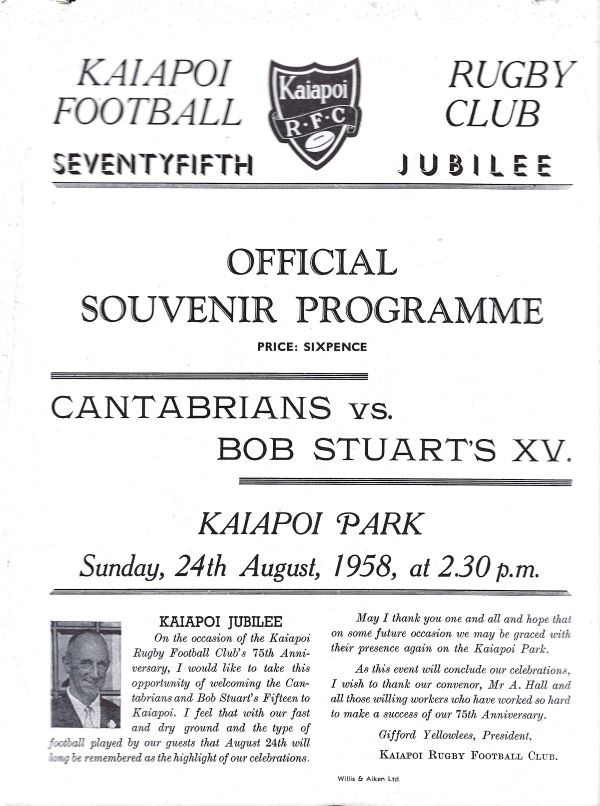
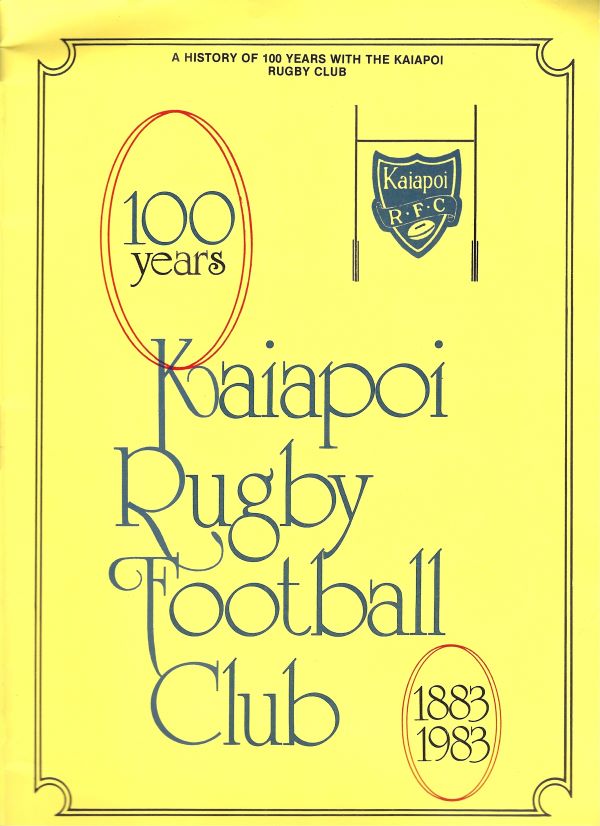
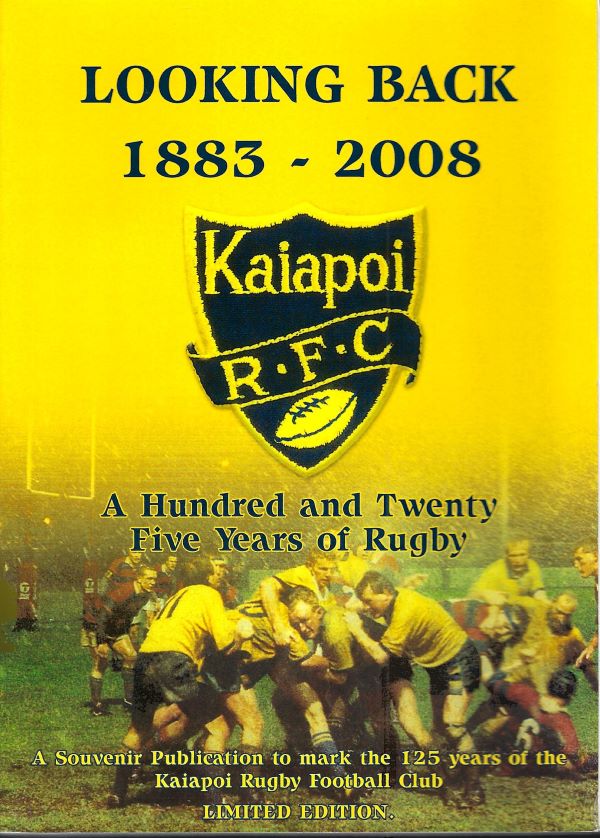
Jubilee History: The club has meticulously documented its own journey through major milestones, publishing commemorative histories for its 70th Jubilee (1958), its Centenary (1983), and its 125th Jubilee (2008).

The “Four in a Row” Glory Days: Local lore and club histories frequently celebrate the legendary eras of the 1980s, where Kaiapoi dominant senior teams achieved the highly coveted “Four in a Row” championship titles in the North Canterbury competitions—cementing them as regional heavyweights.

Kaiapoi’s All Blacks

For a country club, producing players who go on to wear the famous silver fern is the ultimate badge of honor. Kaiapoi has historical ties to several notable All Blacks, including:

David Gage (All Black #24): One of the most legendary figures in early New Zealand rugby history. A prolific back/forward who played for the Native Team tour of 1888–1889 and debuted for the All Blacks in 1893. He had deep roots playing in the Canterbury/Kaiapoi region.

William “Bill” Balch (All Black #47): A lightning-fast winger/three-quarter from the club’s early golden era who earned his All Black selection in 1894.

Alfred “Alf” Cooke (All Black #49): Another standout 1894 All Black backline player who represented Canterbury and Kaiapoi with distinction.

Club Identity & Modern Era

The Colors: Kaiapoi takes the field in its traditional and iconic Gold and Blue strip.

The Combined Competition: In the modern era, North Canterbury clubs joined forces with neighboring sub-unions (like Mid-Canterbury and Southbridge/Ellesmere) to play in highly competitive Combined Competitions. Kaiapoi has seen major resurgences here, creating fierce modern rivalries against powerhouse country clubs like Glenmark-Cheviot.

Grassroots Power: The club runs an incredibly strong Junior Advisory Board (JAB), drawing massive community support from local families and feeding senior grades from age six upwards.

Today, the gold and blue remains a vital hub of the Waimakariri district, still producing Canterbury country representatives and maintaining its status as one of the oldest active clubs in the nation.

CLICK IMAGE TO ENLARGE

Kaiapoi Rugby Club Seventieth Jubilee 1958

Club:
Year published:
Author:
Page count:
Notes:
Kaiapoi Rugby Club
1958
Not stated
4 pages
Souvenir programme Cantabrians XV v Bob Stuart’s XV
CLICK IMAGE TO ENLARGE

Kaiapoi Rugby Club Seventieth Jubilee 1958

Club:
Kaiapoi Rugby Club
Year:
1958
Author:
Not stated
Pages:
4 pages
Notes:
Souvenir programme Cantabrians XV v Bob Stuart’s XV
CLICK IMAGE TO ENLARGE

100 Years of Rugby 1883 – 1983

Club:
Year published:
Author:
Page count:
Notes:
Kaiapoi Rugby Club
1983
Not stated
48 pages
CLICK IMAGE TO ENLARGE

100 Years of Rugby 1883 – 1983

Club:
Kaiapoi Rugby Club
Year:
1983
Author:
Not stated
Pages:
48 pages
Notes:
CLICK IMAGE TO ENLARGE

Looking Back 1883 – 2008 – A Hundred and Twenty Five Years of Rugby

Club:
Year published:
Author:
Page count:
Notes:
Kaiapoi Rugby Club
2008
Not stated
169 pages
CLICK IMAGE TO ENLARGE

Looking Back 1883 – 2008 – A Hundred and Twenty Five Years of Rugby

Club:
Kaiapoi Rugby Club
Year:
2008
Author:
Not stated
Pages:
169 pages
Notes: